
Sailing in UK waters demands a meticulous approach to safety, where even the smallest detail can make a difference between a successful voyage and catastrophe. A 2019 study revealed that 30% of maritime accidents were linked to poorly maintained safety equipment, underscoring the significance of regular servicing.
Whether braving the North Sea or exploring coastal jewels, the importance of well-serviced life-saving apparatus cannot be overstated. In this article, we delve into the realms of marine safety specialists and their crucial role in ensuring that liferafts and lifejackets are up to standard and ready for action.
Exploring the Role of Marine Safety Specialists in Navigating the High Seas
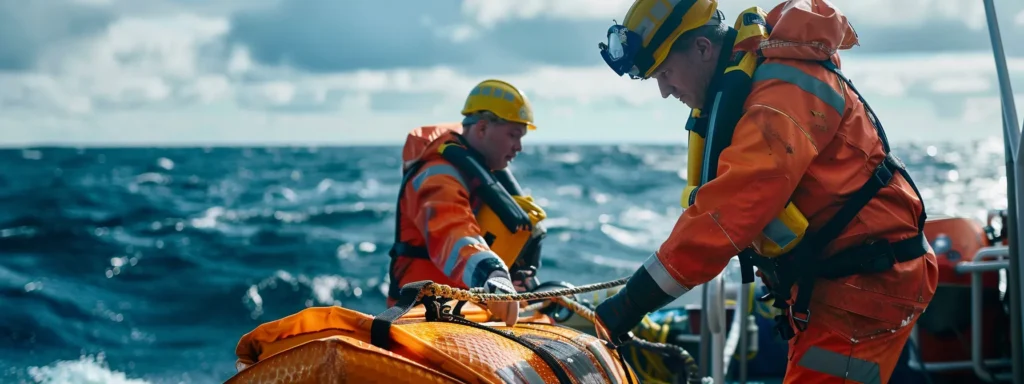
Marine safety specialists operate as the sentinels of the sea, tasked with safeguarding lives by equipping vessels with fail-safe safety gear. Their vigilant oversight extends to the maintenance and certification of life-saving equipment, ensuring compliance with strict maritime safety regulations.
With 95% of UK’s trading goods transported by water, the consistency of safety measures across the fleet is paramount. Specialists conduct rigorous inspections of liferafts, lifejackets, and other critical safety apparatus to detect and rectify any potential impairments or malfunctions.
For sailors, engaging with certified marine safety specialists is a proactive step in mitigating risks. It is advisable to schedule regular equipment checks and embrace their expertise to understand the Universal Safety nuances of modern safety gear, from advanced material technologies to improved buoyancy features.
Essential Skills and Training for Marine Safety Professionals
Marine safety professionals possess a unique blend of skills, combining technical know-how with critical survival training. Their ability to quickly assess and address equipment issues is pivotal in ensuring a swift emergency response should the need arise.
To maintain this standard of proficiency, these experts undergo continuous training involving simulated emergency scenarios, familiarizing them with every aspect of safety equipment operation. This due diligence results in a 40% faster deployment rate of emergency rafts compared to untrained personnel, demonstrating the value of their expertise.
Aspiring marine safety professionals must prioritize acquiring certifications in safety equipment management. This includes hands-on training with liferafts and lifejackets, which offers both practical experience and a thorough comprehension of maritime safety protocols.
Navigating Regulatory Compliance and Best Practices in Marine Safety
Marine safety is governed by an intricate framework of international and regional regulations designed to standardize procedures and equipment quality. Compliance is not just a legal mandate; it’s a benchmark for operational excellence in the maritime sector.
Specialists must keep abreast of evolving policies such as the International Convention for the Safety of Life at Sea (SOLAS), which affects over 50,000 ships worldwide. They ensure that every piece of safety equipment aboard is compliant, thus aligning operational practices with global safety standards.
Vessel operators should liaise with marine safety professionals to decode complex regulations and apply best practices. This partnership streamlines compliance and cultivates an informed safety culture on board, reducing the likelihood of accidents through preventive measures.
Innovations in Marine Safety Equipment and Technology
Innovation in marine safety technology has led to advancements that significantly enhance the chances of survival at sea. Smart gadgets and high-performance materials are raising the bar for what is considered ‘safe enough’ aboard modern vessels.
Thanks to GPS and water-activated lights, personal locator beacons can now guide rescuers to a precise location within minutes. Moreover, contemporary lifejackets are equipped with hydrostatic release mechanisms that enable automatic inflation, providing immediate assistance to individuals in distress.
It is critical that sailors and marine organizations invest in the latest safety equipment and technology upgrades. Regular training on these new devices is also essential, as it ensures that all crew members are prepared to handle emergencies using the most advanced tools available.
Ultimately, the expertise of marine safety specialists is a linchpin in the realm of seafaring safety. Their multifaceted role—from ensuring regulatory compliance to overseeing advanced technological integration—equips sailors with the tools necessary to navigate UK waters with confidence. As the maritime industry continues to evolve, so too must the vigilance and preparedness of those responsible for keeping its participants safe on every journey.